Health and Safety Policy — Flat Clearance Aldgate
Flat Clearance Aldgate is committed to delivering safe, efficient and compliant clearance and rubbish removal services across its service area. This policy sets out the approach to health and safety for our flat clearance and waste removal operations and applies to all employees, contractors and any person working on behalf of the company. The objectives are to prevent injury and ill health, minimise environmental harm, and maintain high standards of service for every clearance job while managing risks associated with bulky waste, household rubbish and cleared materials.This policy covers the scope of our clearance service, including domestic flat clearance, rubbish collection, and light waste disposal activities. It recognises that hazards can arise from manual handling, the presence of hazardous or unknown materials, working in communal areas of buildings, vehicle operations and temporary storage of waste. We will ensure all operations are planned, supervised and carried out in a way that protects the safety of staff, clients, and the public while maintaining the quality of the clearance service.
 All staff are required to follow safe working procedures and to take reasonable care for their own health and safety and that of others. Responsibilities are defined as follows: management will provide leadership, resources and monitoring; supervisors will ensure the safe implementation of procedures; and operatives will carry out tasks in accordance with training and risk control measures. Employees must report unsafe conditions or incidents immediately and cooperate with investigations to prevent recurrence.
Risk assessment is central to our safety strategy. Before any flat clearance or rubbish collection task begins, a suitable and sufficient risk assessment will be completed to identify hazards and implement controls. Typical controls include the use of appropriate PPE (gloves, safety boots, high-visibility clothing, and dust masks), the provision of mechanical aids where necessary, and the adoption of safe lifting techniques. Assessments will also consider building access, stairway constraints, and the presence of sharps or hazardous substances.
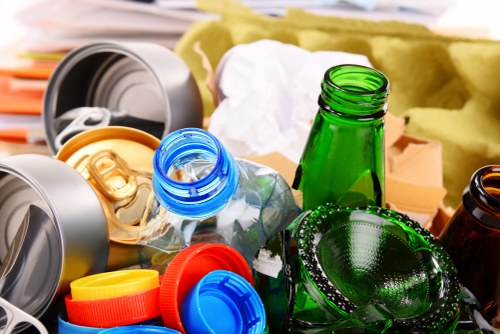
 The company has specific procedures for the segregation, handling and disposal of waste streams. Where items are suspected to contain hazardous materials (e.g. solvents, asbestos-like materials, chemical containers, or electrical goods with unknown faults) they will be isolated and managed in accordance with regulatory requirements. Our waste handling process ensures recyclable materials are separated from general rubbish and that hazardous items are identified and passed to authorised disposal channels. This approach reduces risk to staff and the wider community and supports environmental best practice.
Training and competence are essential to safe clearance operations. All staff receive induction training covering safe systems of work, manual handling, PPE, fire safety and vehicle safety. Regular refresher training and toolbox talks will be conducted. We maintain records of training and competency assessments and require contractors to demonstrate equivalent standards. Supervision ensures that inexperienced workers receive guidance and that safety procedures are consistently applied on every job.
Incident reporting and investigation are integral to continual improvement. Any accident, near miss or health concern must be reported without delay. Incidents will be investigated to identify root causes and appropriate corrective actions. The outcome of investigations will inform updates to risk assessments and safe systems of work to prevent repetition. We promote a culture where timely reporting and open communication are encouraged.
 Practical controls and safe working practices include:
- Planned and supervised manual handling, using team lifts or mechanical aids where required.
- Securing loads in vehicles and following safe driving practices during rubbish collection and waste transport.
- Maintaining clear access routes and good housekeeping at clearance sites to prevent slips, trips and falls.
 Fire safety, first aid provision and emergency procedures are set out and accessible to all staff. Fire risks are assessed for each workplace and temporary clearance location, and appropriate measures—such as fire extinguishers and escape plans—are put in place where necessary. First aid kits are available in vehicles and at main depots, and nominated first aiders are appointed. In emergencies, staff must follow the company emergency response plan and seek professional assistance as required.
Contractors and Subcontractor Management
When using subcontractors for specialised waste removal or larger clearance projects, the company will ensure that those contractors demonstrate suitable health and safety standards. Contractors must provide evidence of insurance, training, and risk management practices before they carry out work. We will coordinate activities to ensure safety arrangements are compatible and that all parties understand their responsibilities.Monitoring, Review and Policy Maintenance
This policy will be reviewed periodically and whenever there are significant changes to legislation, operations or following a serious incident. Regular audits of site practices, vehicle checks and equipment maintenance will be undertaken to ensure compliance and continual improvement. The policy is communicated to all staff and is available for review during management inspections.Commitment: Flat clearance and rubbish collection activities will be conducted with due regard to the health and safety of personnel and the public. By applying robust risk management, competent training, and clear responsibilities, our clearance company aims to deliver a safe, reliable and professional rubbish removal and clearance service across its service area.